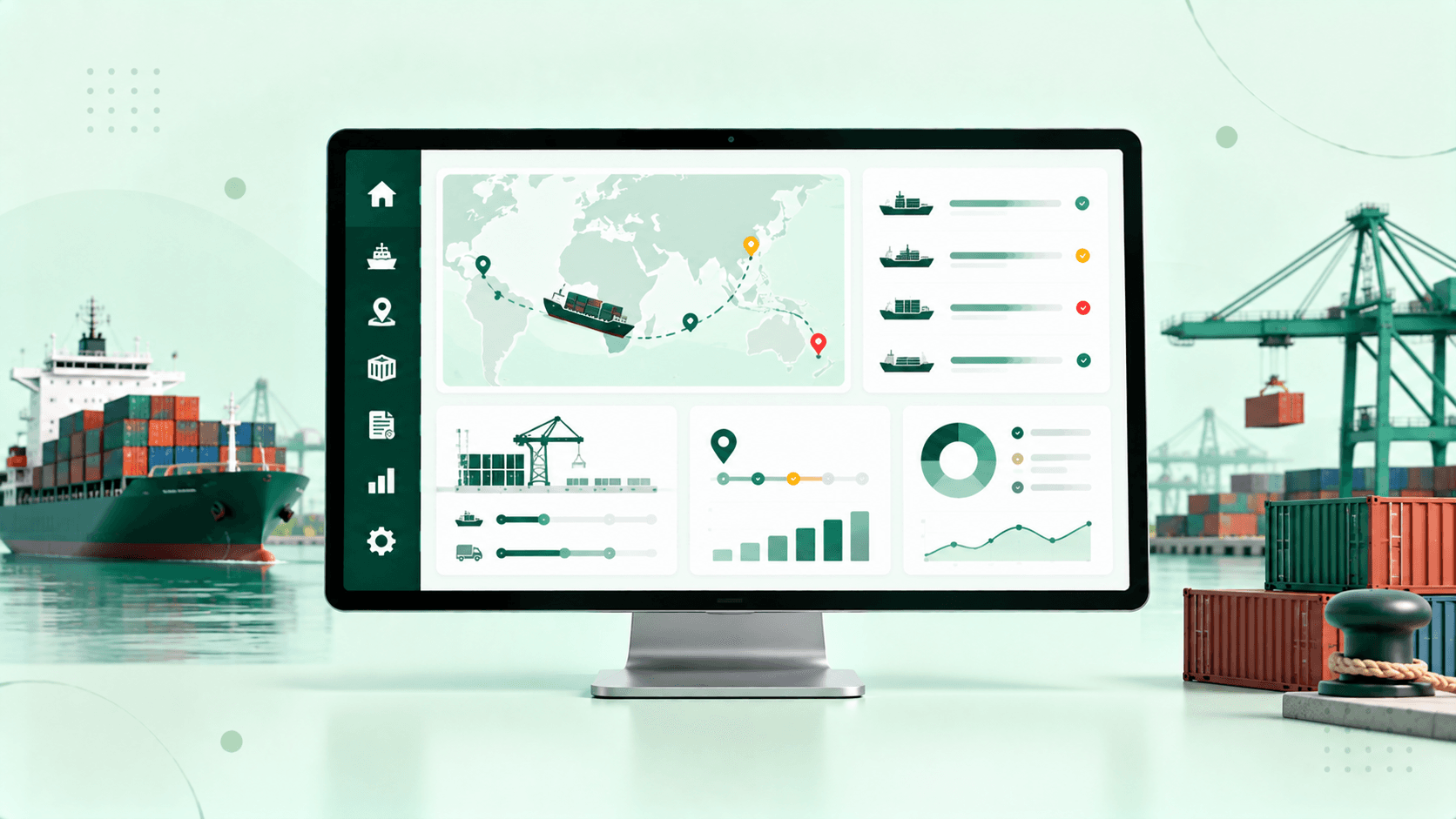
Launch and validate a maritime logistics MVP with integration-ready architecture for AIS, carrier, port, and terminal data without overbuilding the first release.
Results depend on scope, integrations and adoption.
The operating context
A clearer view of the whole operation.
Maritime logistics startups operate in an environment shaped by ports, carriers, agents, terminals, vessels, cargo milestones, and legacy systems. A useful MVP must fit into these real operational workflows while proving that the product solves a problem worth adopting.
Where friction builds
Where maritime startups struggle
Many maritime startups begin with dashboards and tracking features before validating how operators actually work. Port calls, vessel movements, cargo milestones, ETA changes, and operational exceptions involve multiple users and data sources, so a visually strong prototype can still fail in real operations.
Integration complexity appears early as well. AIS providers, terminal systems, carrier APIs, and internal logistics platforms may expose different data structures and access constraints. A focused MVP should validate the core workflow while proving that the required operational data can be connected reliably.
Current approach
Build dashboards before validating workflows
Add too many MVP features
Delay integration planning
Ignore operational user roles
Operational impact
Validation takes too long
Operational workflows remain incomplete
Integration rework increases later
Pilot users struggle with adoption
Inside the solution
The capabilities behind the operation.
Review the functional scope, then discuss the requirements specific to your team.
Tracking Dashboard
View vessel or cargo movement with real-time updates.
ETA and Delay Insights
Monitor estimated arrival times and identify delays early.
Operational Workflows
Support port and terminal processes like scheduling and coordination.
Alerts and Notifications
Get updates on key events such as delays or status changes.
Role-Based Views
Provide tailored dashboards for ports, agents, and operators.
Basic Reporting
Generate simple reports and export operational data.
Design workflows based on real maritime operations
03
Build API-first architecture for integrations
04
Launch quickly with a validation-ready product
Our approach
We work closely with founders to define a clear MVP scope based on real maritime use cases. From understanding user roles to designing core workflows, we focus on building a lean, functional product that integrates with existing systems. Our approach prioritizes fast validation, clean architecture, and readiness for real pilot environments.
How it connects
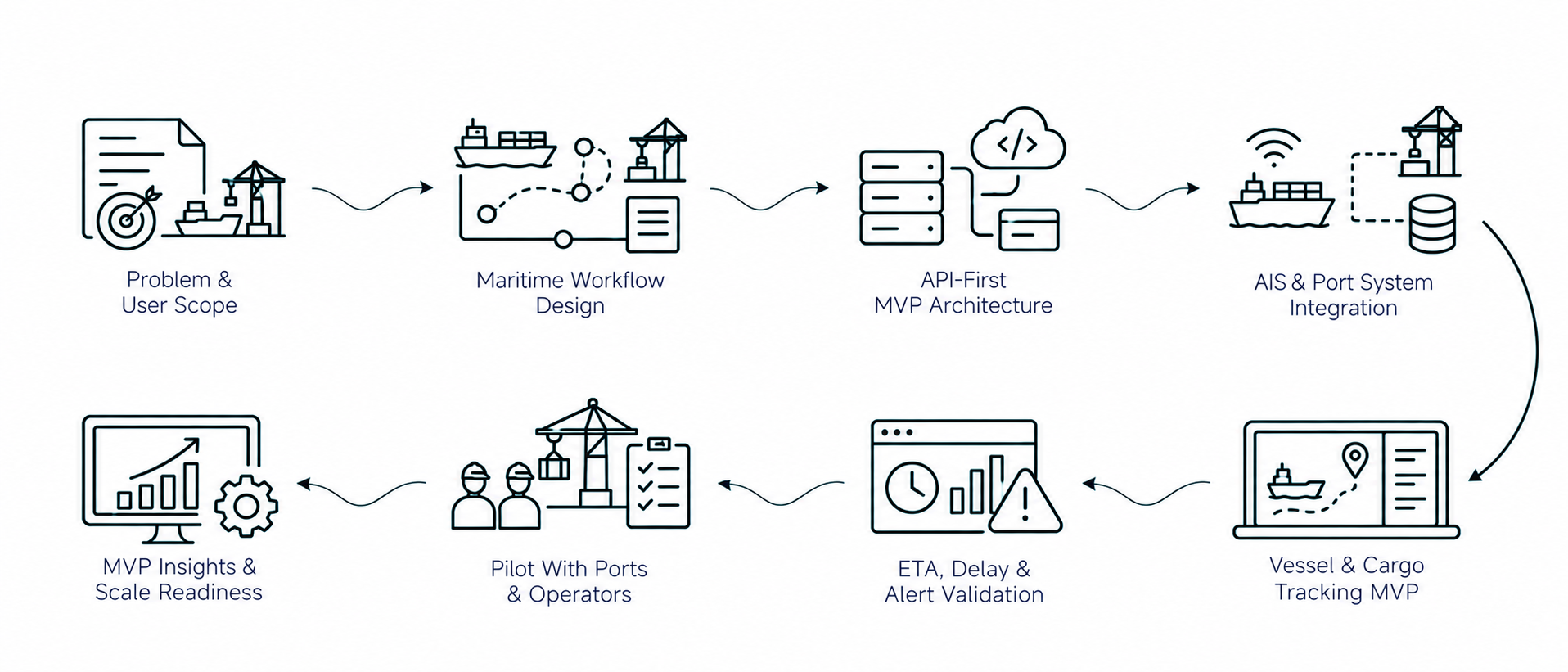
The complete workflow, in one view.
Make an informed decision
Is this the right fit?
The right solution starts with the right operating requirements.
What features should a maritime logistics MVP include?
A focused maritime logistics MVP can include vessel or shipment tracking, ETA monitoring, milestone tracking, delay alerts, role-based workflows, cargo visibility, and an operational dashboard. The exact scope should be based on the specific problem being validated and the data sources available.
Can a maritime logistics MVP integrate with AIS vessel tracking data?
Yes, when a suitable AIS data provider or API is available. AIS data can support vessel location, movement, speed, destination, and ETA-related workflows, but coverage, latency, historical access, and commercial usage rights depend on the selected provider.
Can the MVP integrate with ports, terminals, or carrier systems?
Yes, where APIs, EDI feeds, webhooks, or other supported integration methods are available. The MVP can connect terminal events, carrier shipment data, port milestones, or internal systems depending on the pilot requirements and system access.
How long does it take to build a maritime logistics MVP?
The timeline depends on workflow complexity, number of user roles, external integrations, data availability, and pilot requirements. I would avoid relying on the current fixed 6–12 week promise unless that range consistently matches your actual delivery history.
Can a maritime MVP scale into a full logistics platform later?
Yes, if the MVP is designed around clear domain models, APIs, roles, integrations, and event workflows from the start. After validation, additional capabilities such as document automation, predictive ETA, invoicing, analytics, carrier integrations, and customer portals can be added incrementally.
Start with your requirements
Let’s define your next step.
Tell us what needs to work better, the systems you use, and the scope you have in mind.