Results depend on scope, integrations and adoption.
The operating context
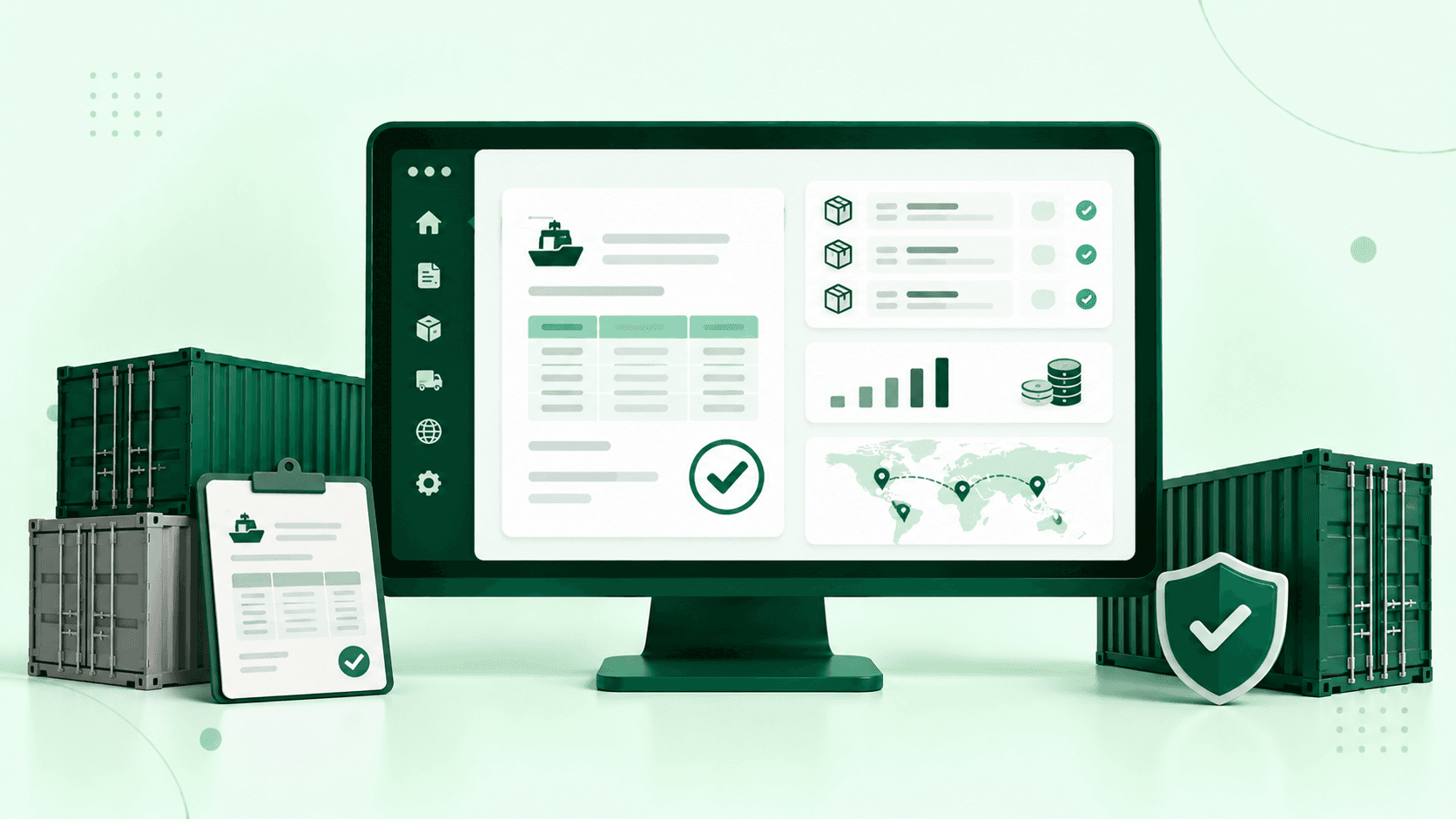
A clearer view of the whole operation.
Global trade operations require organizations to comply with constantly changing customs regulations, documentation requirements, tariff classifications, and import-export controls. Managing customs declarations, duties, audits, and regulatory obligations across multiple countries becomes increasingly complex as shipment volumes grow. Without centralized customs compliance software, businesses face shipment delays, compliance violations, financial penalties, and limited visibility into trade operations.
Where friction builds
Manual customs compliance increases risk, delays, and operational costs
Many importers, exporters, freight forwarders, and logistics providers still manage customs compliance through spreadsheets, emails, disconnected ERP systems, and broker portals. Customs declarations, HS code classifications, duty calculations, and regulatory requirements often vary by country and change frequently. Without automated validation and centralized compliance workflows, errors are discovered only after shipments are delayed, customs authorities intervene, or audits occur. This creates unnecessary operational risk, higher compliance costs, and reduced supply chain efficiency.
Current approach
Prepare customs declarations manually
Maintain HS codes in spreadsheets
Calculate duties outside core systems
Track compliance through broker portals
Operational impact
Classification errors increase duty risk
Shipment clearance gets delayed
Compliance records remain fragmented
Regulatory changes are harder to manage
Inside the solution
The capabilities behind the operation.
Review the functional scope, then discuss the requirements specific to your team.
Customs Declaration Management
Prepare, validate, approve, and track import and export declaration data through structured customs workflows.
Assess import, export, customs, and trade compliance workflows
02
Identify compliance risks, documentation gaps, and operational bottlenecks
03
Centralize customs data, tariff classifications, and regulatory requirements
04
Automate declarations, validations, duty calculations, and approval processes
05
Integrate compliance workflows with ERP, TMS, WMS, and finance systems
06
Implement audit-ready reporting and compliance monitoring controls
07
Design scalable solutions that adapt to evolving customs regulations
Our approach
PySquad develops customs and trade compliance software that combines workflow automation, regulatory controls, audit traceability, and logistics integrations into a single platform. Our solutions help organizations manage import and export compliance with greater accuracy, visibility, and confidence.
How it connects
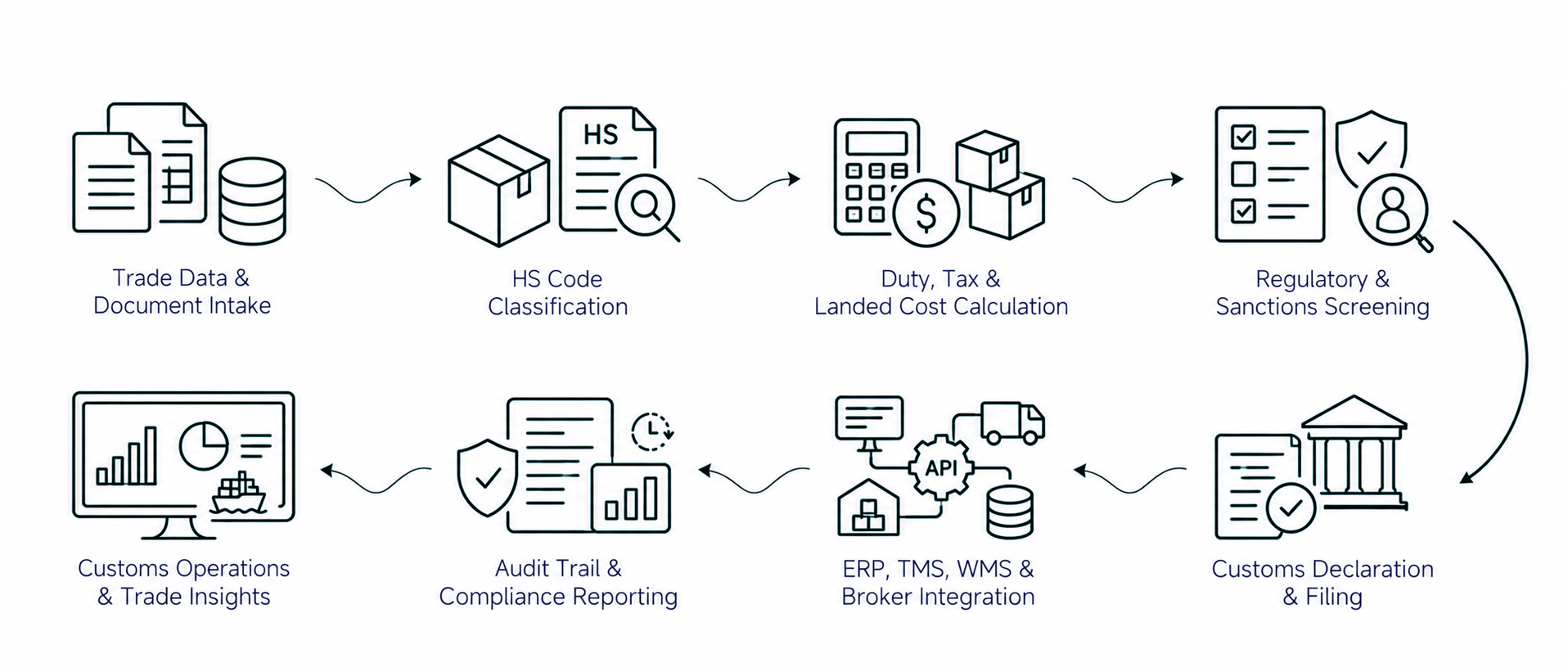
The complete workflow, in one view.
Make an informed decision
Is this the right fit?
The right solution starts with the right operating requirements.
Customs compliance software helps businesses manage customs declarations, trade documentation, HS code classification, duty calculations, regulatory requirements, and audit records. It automates compliance workflows to reduce manual errors, improve customs clearance efficiency, and support international trade operations.
How does customs compliance software reduce shipment delays?
Customs compliance software validates documentation, tariff classifications, and regulatory requirements before shipments are submitted. By identifying errors early and automating compliance checks, businesses can reduce customs holds, avoid clearance issues, and accelerate cross-border shipment processing.
What features should customs and trade compliance software include?
Effective customs and trade compliance software typically includes customs document management, HS code classification, duty and tax calculations, customs declaration workflows, sanctions screening, regulatory rules management, audit trails, compliance reporting, and integrations with ERP, TMS, and WMS platforms.
Can customs compliance software automate HS code classification and duty calculations?
Yes. Customs compliance software can centralize product classification data, automate HS code assignment workflows, apply tariff schedules, and calculate duties and taxes based on shipment details and country-specific regulations. This improves accuracy and reduces compliance risk.
Why choose custom customs compliance software instead of an off-the-shelf solution?
Custom customs compliance software can be tailored to your organization's workflows, regulatory requirements, approval processes, reporting needs, and system integrations. Unlike generic platforms, a custom solution provides greater flexibility, scalability, and alignment with complex international trade operations.
Start with your requirements
Let’s define your next step.
Tell us what needs to work better, the systems you use, and the scope you have in mind.