Reduced delays, penalties, and coordination overhead
Audit-ready shipment and customs records
Results depend on scope, integrations and adoption.
The operating context
A clearer view of the whole operation.
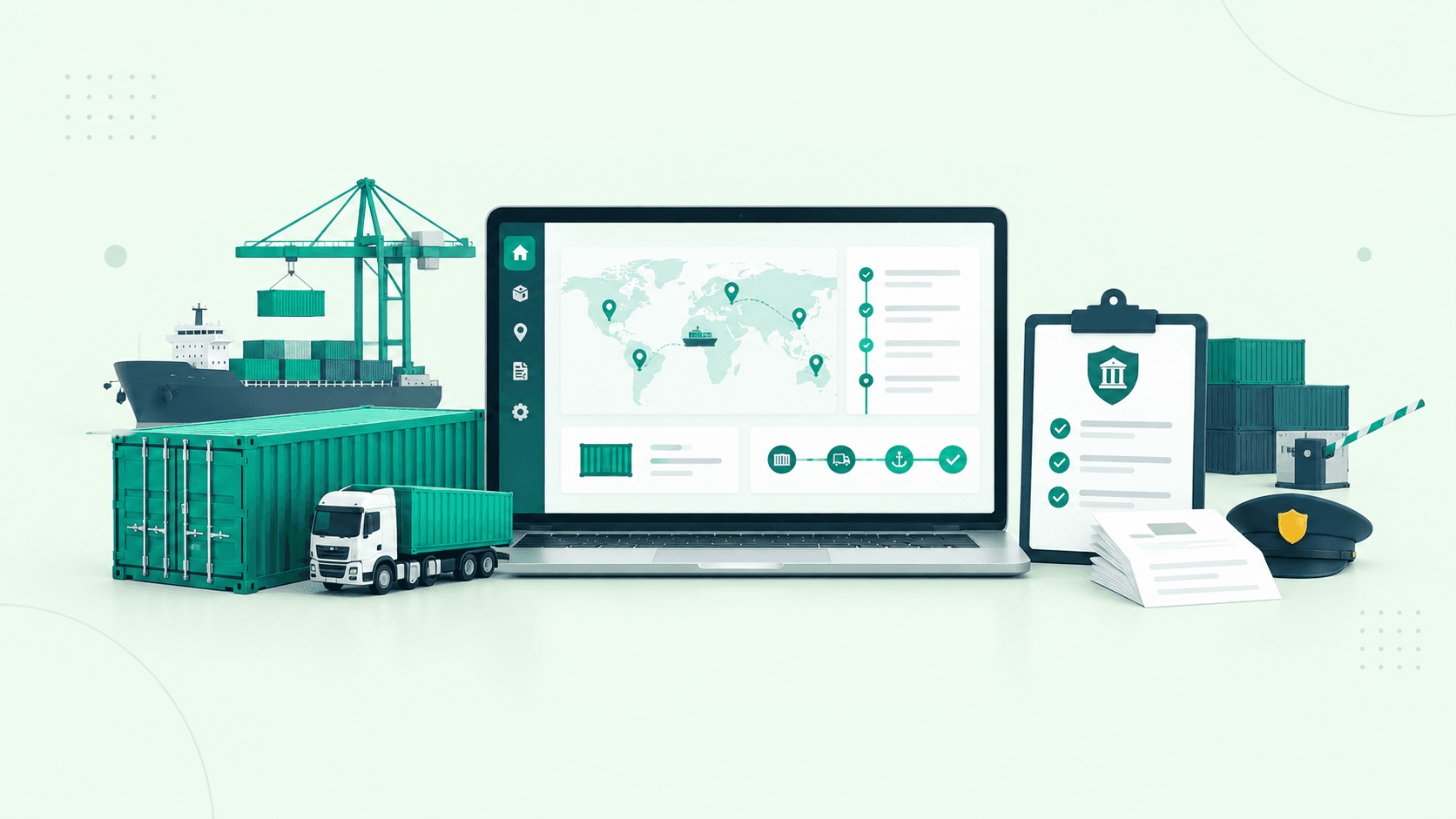
International shipments involve containers, carriers, ports, freight agents, customs documentation, delivery milestones, and multiple handoffs. When shipment records and documents are spread across email, spreadsheets, carrier portals, and separate systems, teams can lose visibility into status, responsibilities, and required paperwork. An Odoo based container and customs management system can connect shipment data, milestones, documents, approvals, compliance checks, and stakeholder communication in one operational workflow.
Where friction builds
Why Container Tracking and Customs Workflows Break Down
Logistics teams often track containers through carrier websites, emails, spreadsheets, and manual status updates while customs documents are prepared separately. This makes it difficult to maintain one reliable shipment record, identify the latest milestone, and ensure required documents are complete before cargo reaches the next stage.
As shipment volumes increase, these gaps create more coordination work. Missing information, inconsistent document versions, delayed status updates, and unclear ownership can slow customs processing and delivery coordination. Teams may also struggle to trace who prepared, reviewed, approved, or submitted important shipment records.
Current approach
Tracking containers through emails and carrier websites
Preparing customs documents manually in spreadsheets
Storing shipment records across multiple tools
Relying on people to chase status updates
Operational impact
No real-time visibility of container movements
High risk of document errors and missing data
Delays caused by poor coordination
Weak audit trails and compliance exposure
Inside the solution
The capabilities behind the operation.
Review the functional scope, then discuss the requirements specific to your team.
Live container tracking
Real-time container location and status through carrier, AIS, and port integrations.
Automated shipment milestones
Gate-In, vessel loading, transshipment, POD, and delivery updates without manual follow-ups.
Customs document generation
Invoices, packing lists, BL, COO, HS codes, and export documents generated from shipment data.
Document storage and version control
Centralized repository with history, approvals, and traceability.
Compliance and approval workflows
Structured checks to reduce errors before submission to customs or partners.
Customer and agent portals
Self-serve access to shipment status and documents for external stakeholders.
Map real export and import workflows before building
02
Centralize shipment, container, and document data in Odoo
03
Automate milestones and document creation at the source
04
Design for compliance, visibility, and scale from day one
Our approach
PySquad builds Odoo based logistics workflows that connect containers, shipments, milestones, customs documents, approvals, and external stakeholders. Carrier, port, tracking, and other data sources can be integrated where APIs or supported interfaces are available, while document workflows provide structured validation, version history, and traceability.
How it connects
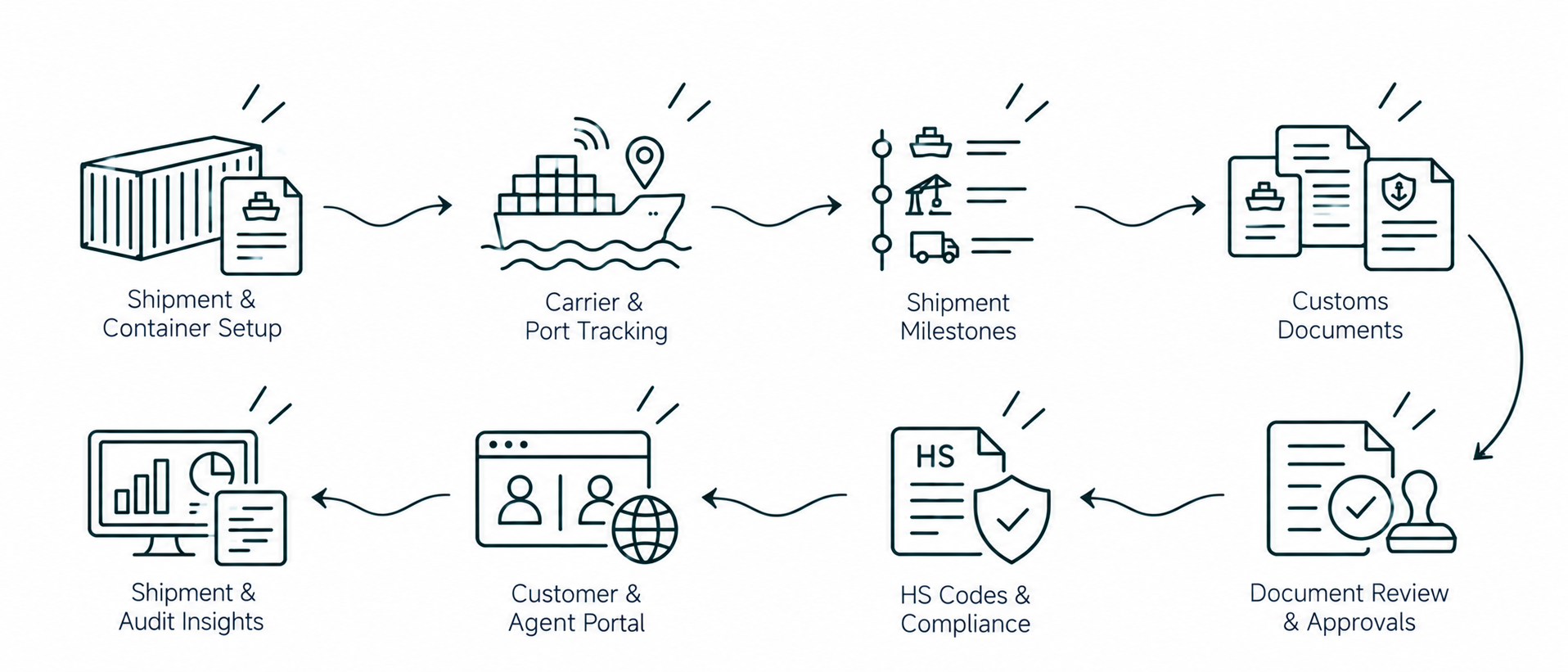
The complete workflow, in one view.
Make an informed decision
Is this the right fit?
The right solution starts with the right operating requirements.
Can Odoo track containers and shipment milestones?
Yes. Odoo can be integrated with carrier, port, tracking, or logistics data sources to capture available container events and shipment milestones. The level of tracking depends on the data provided by each source.
Can customs and shipping documents be generated automatically?
Yes. Structured shipment data can be used to generate documents such as commercial invoices, packing lists, bill of lading drafts, certificates of origin, and other required records based on the configured workflow.
Can the system manage HS codes and customs related data?
Yes. HS codes and related customs fields can be stored against products and shipments, mapped to business rules, and included in document generation and validation workflows.
Can customers, freight agents, or partners access shipment information?
Yes. Controlled portals can provide approved users with access to shipment status, documents, requests, and relevant updates without exposing the full internal Odoo environment.
Can the system track demurrage and detention related risks?
Yes. The system can monitor relevant shipment milestones and configurable free time or deadline rules, then generate alerts when a shipment approaches defined demurrage or detention thresholds.
Start with your requirements
Let’s define your next step.
Tell us what needs to work better, the systems you use, and the scope you have in mind.