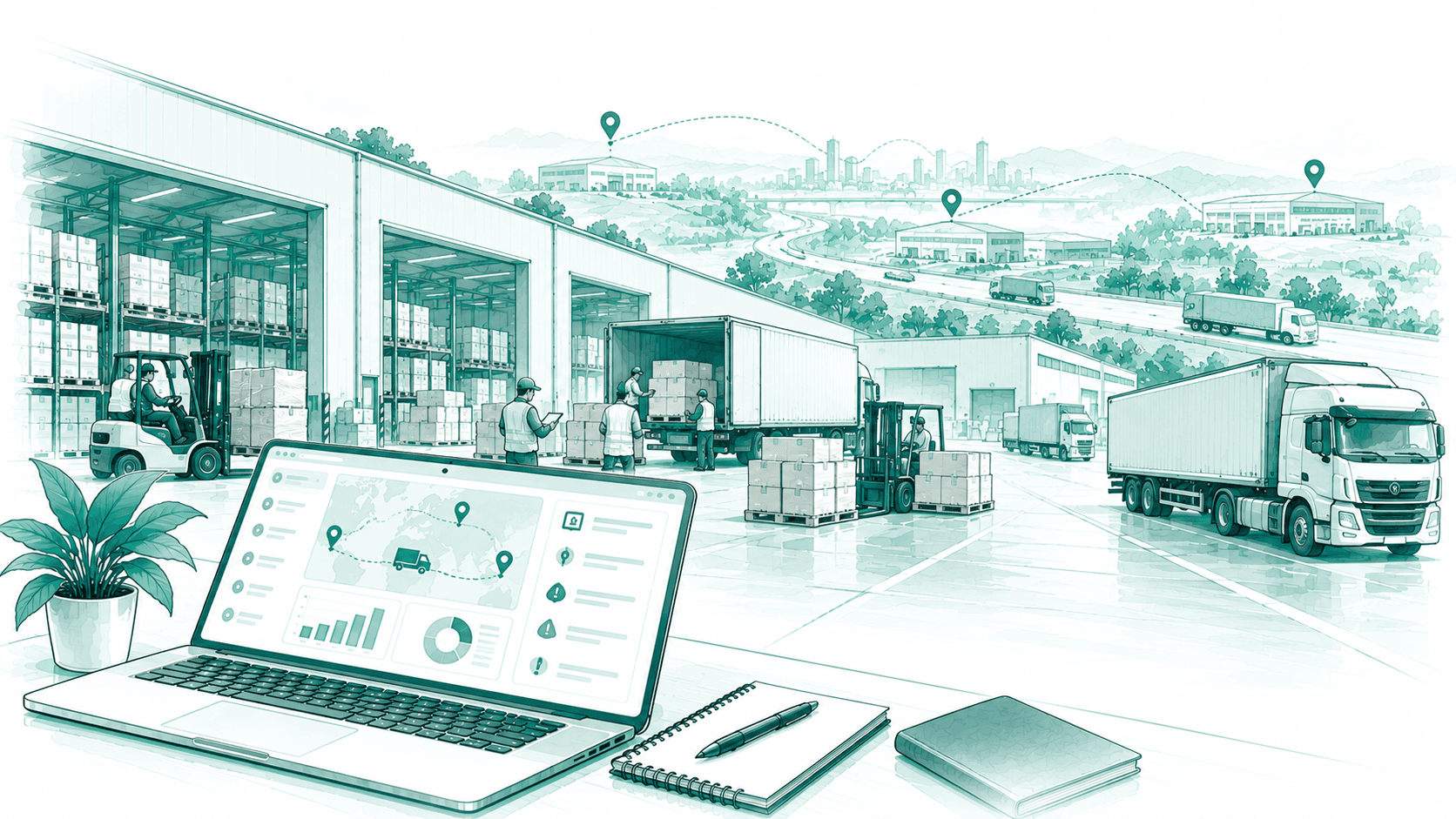
Transform logistics operations with AI and Odoo. PySquad builds intelligent logistics automation systems that streamline warehouse management, fleet operations, shipment tracking, inventory control, and documentation for businesses.
Faster logistics execution with significantly less manual effort
Greater operational accuracy across inventory, shipments, and documentation
Improved warehouse, fleet, and resource utilization
Scalable logistics operations with real time visibility and better customer experience
Results depend on scope, integrations and adoption.
The operating context
A clearer view of the whole operation.
Modern logistics operations involve warehouses, transportation, inventory, procurement, documentation, and customer fulfillment working together continuously. As shipment volumes increase, manual coordination and disconnected systems become major operational bottlenecks. AI combined with Odoo creates a unified logistics platform that automates routine processes, improves operational visibility, predicts potential issues, and enables logistics teams to make faster, data driven decisions across the entire supply chain.
Where friction builds
Why Growing Logistics Operations Become Increasingly Difficult to Manage
Many logistics businesses still depend on spreadsheets, manual approvals, phone calls, and disconnected software to coordinate shipments, warehouses, inventory, and transportation. These fragmented processes create delays, duplicate work, inaccurate inventory records, higher transportation costs, and limited visibility across daily operations.
As operations expand across multiple warehouses, fleets, suppliers, and customers, these inefficiencies multiply rapidly. Without intelligent automation and centralized operational data, managers spend more time resolving exceptions than improving performance, making sustainable growth expensive, slow, and difficult to control.
Current approach
Managing logistics through spreadsheets and manual coordination
Using separate systems for warehouse, fleet, billing, and inventory
Planning routes without predictive analytics
Generating logistics documents manually
Monitoring operations through delayed reports
Operational impact
High operational costs caused by repetitive manual work
Frequent inventory and shipment errors
Limited visibility into warehouse and transportation performance
Poor scalability as shipment volumes increase
Inside the solution
The capabilities behind the operation.
Review the functional scope, then discuss the requirements specific to your team.
End-to-End Shipment Automation
Automate shipment creation, allocation, dispatch, tracking, and completion using configurable business workflows.
AI Powered Route and Load Optimization
Improve delivery efficiency through intelligent route planning and optimized vehicle utilization.
Real-Time Operational Visibility
Monitor warehouses, fleets, inventory, and deliveries from centralized dashboards.
Assess existing logistics workflows and operational bottlenecks
02
Design an integrated Odoo logistics architecture aligned with business goals
03
Implement AI models for planning, forecasting, and operational automation
04
Integrate warehouse, fleet, inventory, procurement, and finance processes
05
Validate performance using operational KPIs and business metrics
06
Continuously optimize workflows as logistics operations evolve
Our approach
PySquad builds intelligent logistics automation systems using Odoo and practical AI capabilities designed around real operational workflows. We integrate warehouse management, inventory, transportation, procurement, billing, and customer communication into one connected platform. Instead of adding isolated automation tools, we create intelligent ERP systems that improve visibility, reduce manual work, and support continuous operational improvement as your business scales.
How it connects
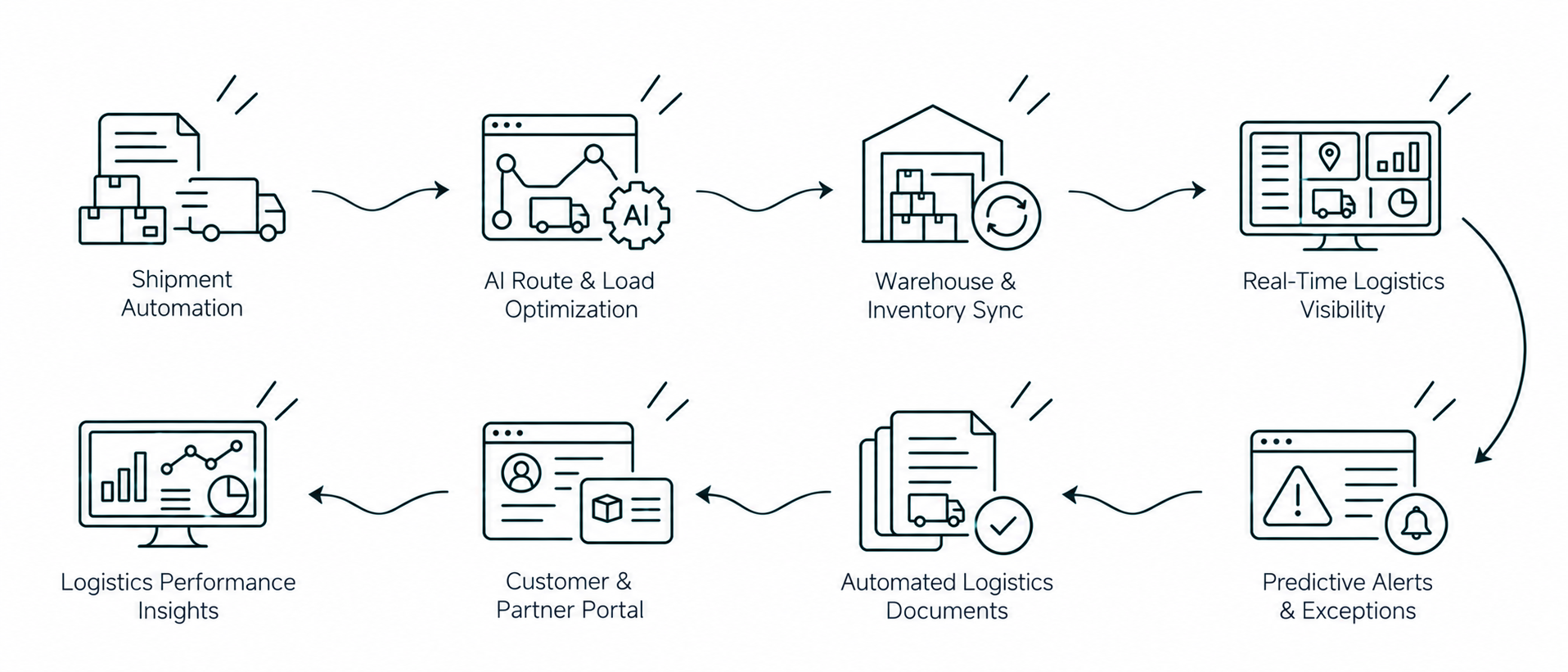
The complete workflow, in one view.
Make an informed decision
Is this the right fit?
The right solution starts with the right operating requirements.
Can AI reduce manual work in logistics operations?
Yes. AI automates repetitive activities such as shipment planning, route optimization, document generation, inventory monitoring, and operational reporting, allowing teams to focus on higher value work.
Can this solution integrate with my existing Odoo ERP?
Yes. We extend existing Odoo implementations whenever possible and develop custom modules only when specific business requirements cannot be addressed through standard functionality.
Does the system support multiple warehouses and locations?
Yes. The solution is designed to manage multiple warehouses, fleets, distribution centers, and logistics operations from a centralized Odoo platform.
How long does implementation usually take?
Most implementations are completed within 6 to 12 weeks, depending on operational complexity, integrations, and customization requirements.
Can customers and logistics partners track shipments?
Yes. Secure customer and partner portals provide real time shipment tracking, delivery updates, documents, and communication throughout the logistics process.
Start with your requirements
Let’s define your next step.
Tell us what needs to work better, the systems you use, and the scope you have in mind.