Results depend on scope, integrations and adoption.
The operating context
A clearer view of the whole operation.
Waste management operations depend on collection schedules, vehicles, field teams, service locations, complaints, and reporting working together. When these processes are split across spreadsheets, calls, and disconnected systems, service reliability and operational control suffer.
Where friction builds
Manual waste operations create inefficiency and delays
Waste operators often plan collections using fixed schedules while complaints, vehicle status, service completion, and bin information are tracked elsewhere. This makes it difficult to respond quickly to missed pickups, overflow, or changing collection priorities.
As service areas and fleets grow, inefficient routing, incomplete field updates, and fragmented reporting increase operating costs. A connected workflow helps teams coordinate collections, field execution, service issues, and reporting from one operational system.
Current approach
Using fixed schedules for waste collection
Manual tracking of complaints and service requests
Limited visibility into bin status and fleet movement
Disconnected systems for reporting and operations
Operational impact
Missed or delayed waste pickups
Higher fuel and operational costs
Poor service response and citizen dissatisfaction
Difficulty meeting compliance and reporting requirements
Inside the solution
The capabilities behind the operation.
Review the functional scope, then discuss the requirements specific to your team.
IoT bin monitoring
Track bin levels and waste types using sensor-based systems
Route optimisation
Use AI to plan efficient collection routes and reduce fuel usage
Field workforce apps
Enable drivers and teams to manage tasks and updates in real time
Complaint management
Automate service requests, ticketing, and issue resolution workflows
Fleet and performance tracking
Monitor vehicles, drivers, and operational efficiency
Analytics and reporting
Provide dashboards for KPIs, compliance, and operational insights
Design IoT-enabled and workflow automation architecture
03
Build and integrate routing, tracking, and dashboards
04
Deploy and optimize system for real-time operations
Our approach
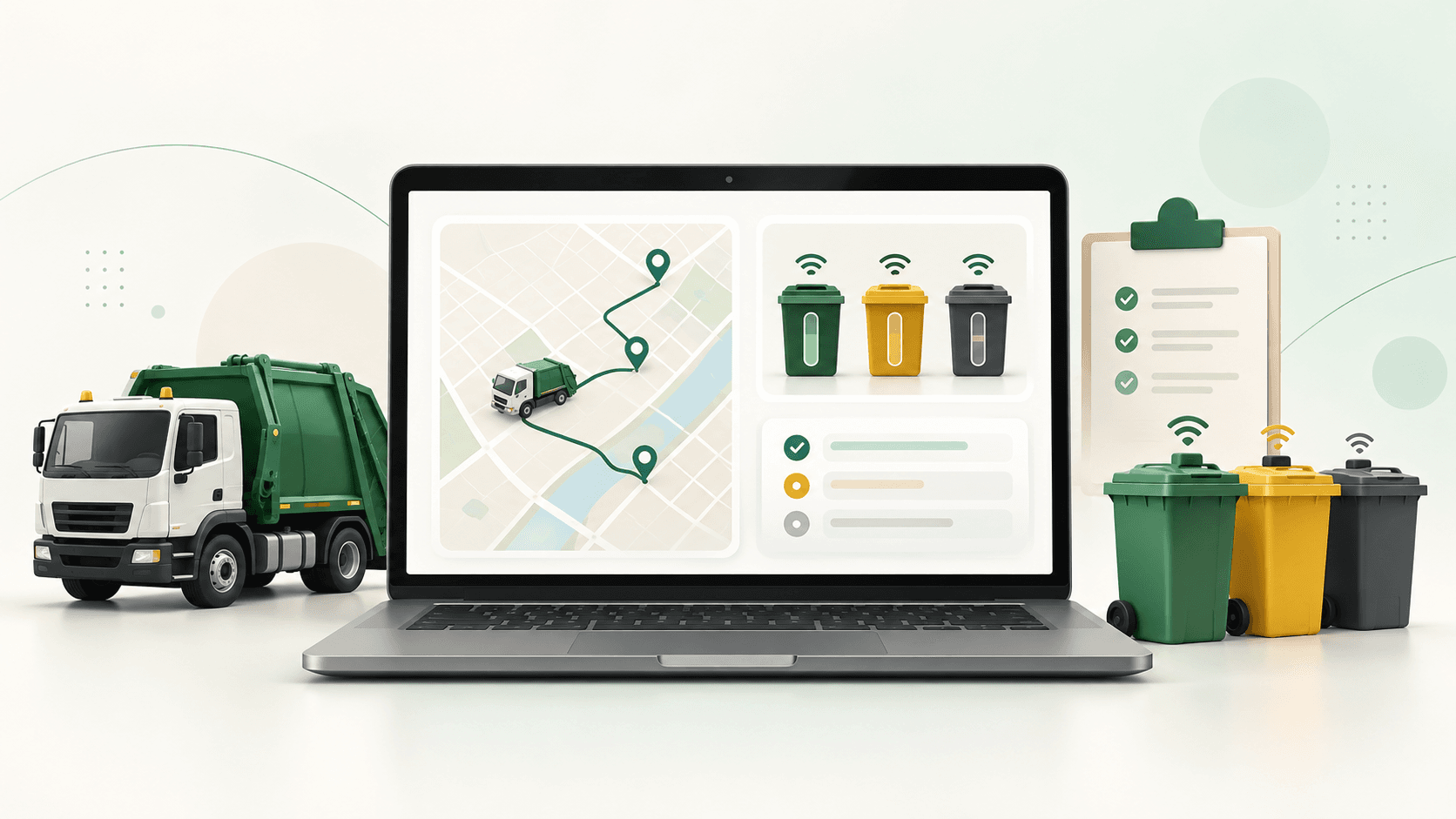
We build end-to-end waste management platforms that integrate IoT sensors, automate workflows, and provide real-time operational visibility. The focus is on improving efficiency, reducing manual effort, and enabling smarter decision-making.
How it connects
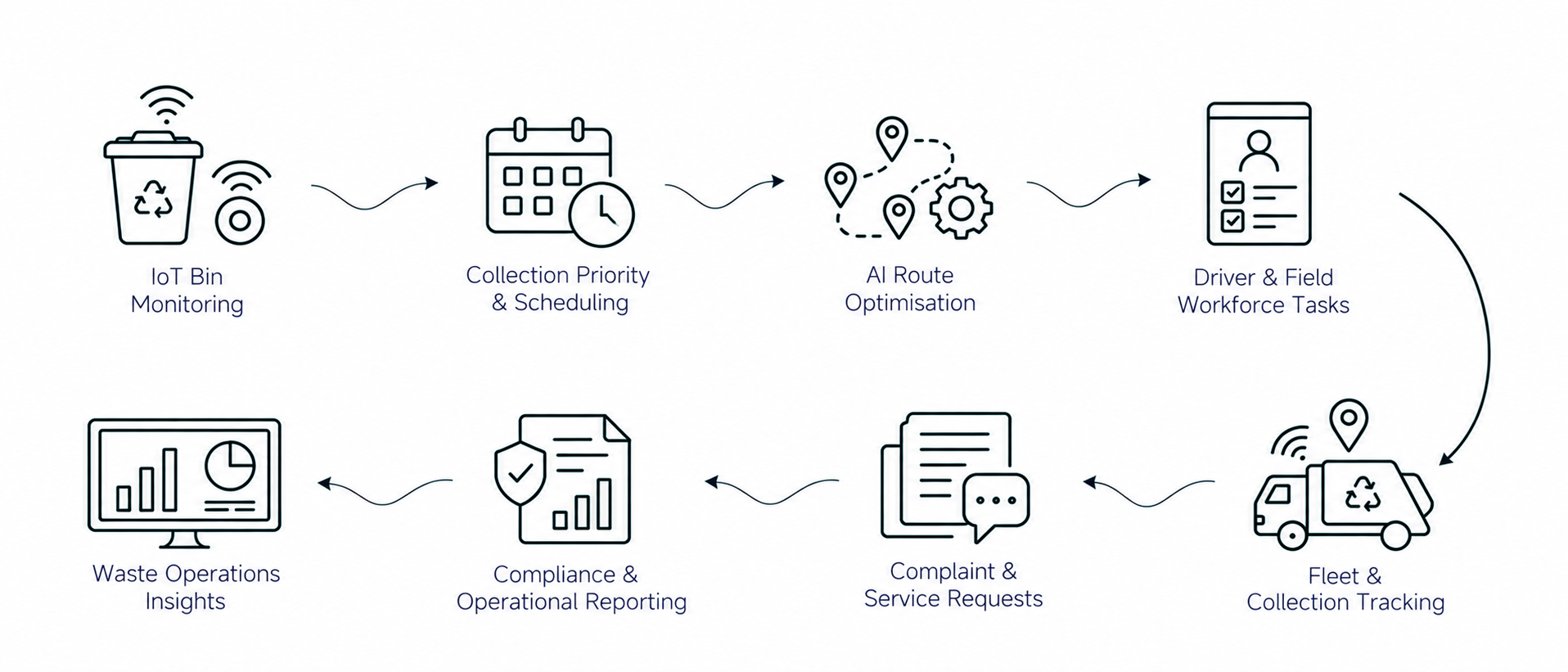
The complete workflow, in one view.
Make an informed decision
Is this the right fit?
The right solution starts with the right operating requirements.
Waste management software helps operators plan collections, manage service locations, dispatch vehicles, track field activity, handle complaints, and report on waste operations. More advanced deployments can also connect GIS, IoT sensors, weighbridges, billing, or municipal systems.
Can waste management software optimize collection routes?
Yes. Routes can be planned using collection locations, service priorities, vehicle capacity, operating constraints, and available status data. Dynamic optimization is also possible when sufficiently current location, service, or sensor data is available.
Can smart bins or IoT sensors be integrated with the platform?
Yes, when the hardware exposes suitable APIs or communication protocols. Fill-level, weight, RFID, GPS, or other sensor data can be connected to support monitoring, alerts, and collection planning, depending on the selected devices and integration architecture.
Can drivers use a mobile app for waste collection operations?
Yes. Drivers and field crews can use mobile workflows to view routes, confirm collections, report exceptions, upload photos, update service status, and record issues from the field. Offline support can also be added where operationally required.
Can waste management software integrate with municipal ERP, GIS, or billing systems?
Yes, where APIs, database access, or supported integration methods are available. The platform can exchange service, customer, billing, location, asset, or reporting data with municipal or enterprise systems based on the required workflow.
Start with your requirements
Let’s define your next step.
Tell us what needs to work better, the systems you use, and the scope you have in mind.