Results depend on scope, integrations and adoption.
The operating context
A clearer view of the whole operation.
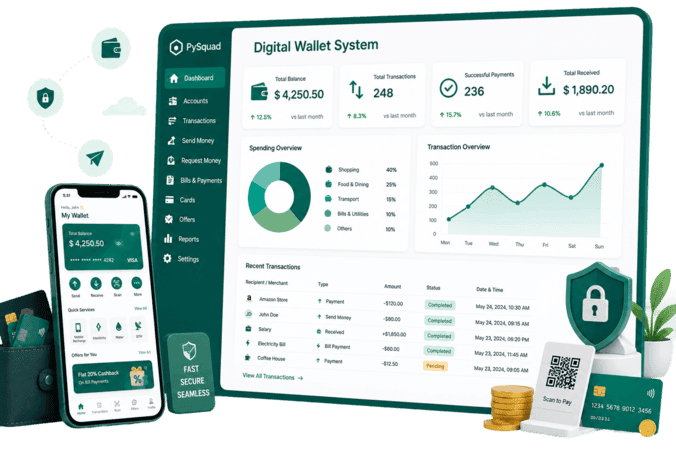
Digital wallets sit at the center of money movement for many modern products. Payments, transfers, rewards, and stored value all depend on accurate balances and reliable transaction handling. When the wallet foundation is weak, trust breaks quickly.
Where friction builds
Wallet systems fail when accuracy and scale are treated as add-ons
Many teams underestimate the complexity of wallet infrastructure. Ledger logic becomes fragile, reconciliation turns manual, and security and compliance gaps appear under real usage. As transaction volume grows, even small inconsistencies can lead to financial risk, user complaints, and audit issues.
Current approach
Updating balances without a ledger
Spreading transaction logic across services
Handling reconciliation manually
Adding compliance after launch
Operational impact
Balances become inconsistent
Reconciliation effort increases
Audit readiness remains weak
Transaction errors grow with volume
Inside the solution
The capabilities behind the operation.
Review the functional scope, then discuss the requirements specific to your team.
Wallet and balance management
User or account wallets with real-time balance calculation and multi-currency support.
Ledger and transaction engine
Immutable credit and debit records that ensure financial accuracy.
Payments and transfers
Wallet transfers, gateway integrations, refunds, and reversals.
Security and access controls
Authentication, authorization, limits, and transaction rules.
Audit logs and reconciliation
Traceable records to support audits, settlement, and compliance.
Admin and reporting tools
Dashboards for monitoring wallets, users, and transaction activity.
We design wallet systems as financial infrastructure, not just features. Balances, transactions, and audit trails are treated as core logic so the system remains reliable as users, volume, and integrations grow.
How it connects
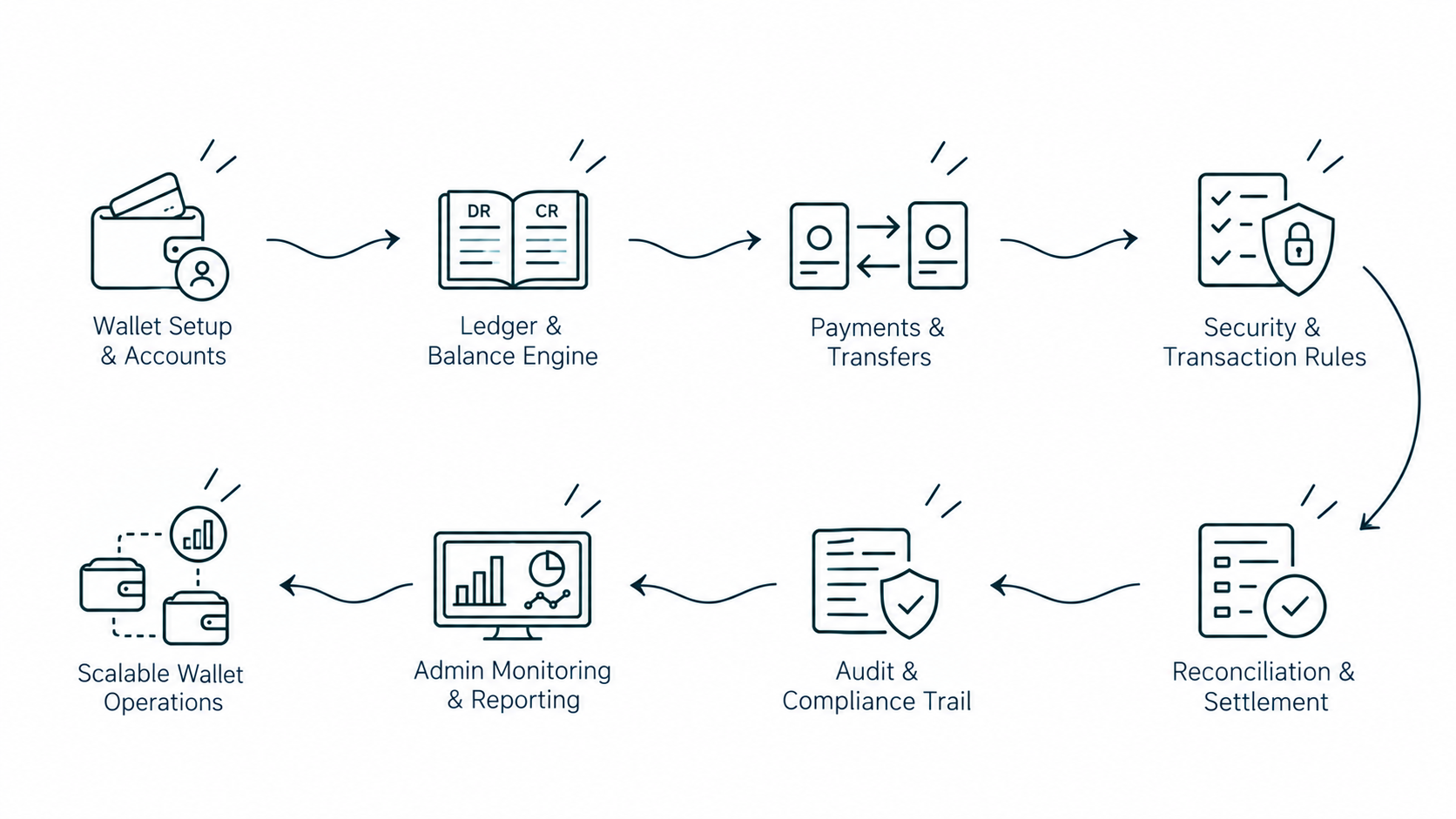
The complete workflow, in one view.
Make an informed decision
Is this the right fit?
The right solution starts with the right operating requirements.