
Donors, campaigns, and commitments
Donor records, pledges, campaigns, receipts, and statements in Odoo, not in a side CRM export.
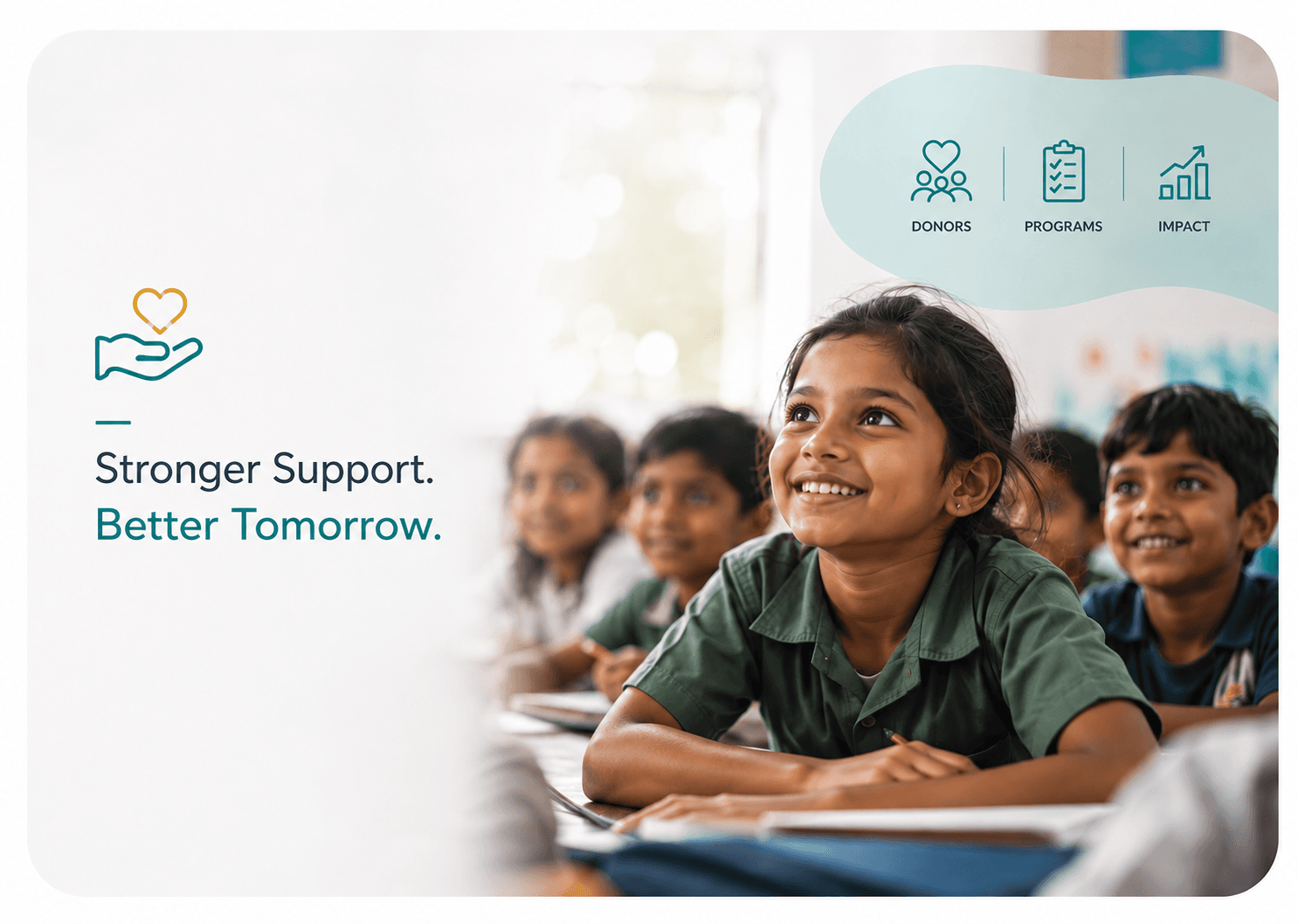
One Odoo desk for donors, grants, programs, field delivery, and fund reports, so the board is not waiting on a spreadsheet rebuild.
Trusted by clients worldwide









NGOs lose days when a donor asks how a grant was spent and what changed in the field. Donor lists, program files, and Accounting do not share one grant record. PySquad NGO is an Odoo app plus implementation. Commitments, grants, programs, service events, and posted spend sit on the same trail. Restricted money stays tagged. Reports and audit packs come from that data, not from a side workbook. Online giving and a partner portal are in the module when you switch them on.
Donor, grant, field, and finance data do not share one grant record
Fundraising lives in a sheet. Programs live in Project or Word. Finance closes the month in Accounting with no grant tag on the line. When a donor or auditor asks for utilization and reach, staff rebuild the story by hand. Restricted funds get mixed. Milestones and compliance lists sit in email. Beneficiary counts do not match invoices. The cost is not one late report. It is slower grant renewals and a board that cannot see portfolio health in the morning.
Common approaches
Where it falls short
Does this match your constraints?
Talk to us before you commit to another generic build.
A short walkthrough of how the system is structured and how teams move through the main workflows.
Product walkthrough
How the system is structured and how teams move through the main workflows.
Building blocks that keep delivery predictable under real operating load.
Donor records, pledges, campaigns, receipts, and statements in Odoo, not in a side CRM export.
Grant agreements, milestones, checklists, and audit bundle metadata on the grant, with alerts before a reporting date is missed.
Programs and Odoo projects tied to funding. Optional logframe (impact, outcome, output, activity) when you track results that way.
Communities, households, beneficiaries, service events, and indicators. Optional MEAL (lessons, evaluations, accountability).
Grant budgets compared to posted accounting entries. Purchase orders and expenses can be tagged to a grant. Restricted fund hierarchy is optional.
Portfolio KPIs with drill-down, plus scorecards, logframe, donor, grant, and fund PDFs from the same records.
Website giving with designation when you enable it. Implementing partners can open their agreements on the portal.
Step 1
Map donor types, grant conditions, programs, and how you post spend today
Step 2
Install and configure PySquad NGO (roles, funds, compliance templates, optional switches)
Step 3
Connect commitments, grants, delivery, and Accounting on one grant trail
Step 4
Turn on online donations, partner portal, audit bundles, or logframe only if you need them
Step 5
Train fundraising, program, M&E, and finance on their own menus
Step 6
Stay through the first donor report and audit pack from the live database
We map how you take money, restrict it, deliver programs, and report. Then we configure PySquad NGO on Odoo: donors and campaigns, grant milestones and compliance, community to beneficiary to indicators, and budget versus actuals from posted entries. Optional pieces (online donations, partner portal, audit bundles, logframe, MEAL) go on only if you use them. We stay through the first reporting cycle.
What teams plan for when scope, integrations, and release are handled as one program.
A grant question is answered from Odoo, not from a rebuilt workbook
Restricted spend is visible against the grant that owns it
Field indicators and finance actuals sit on the same program
Board and donor PDFs come from the same dashboard data
PySquad NGO is the operations layer for nonprofits that already run (or will run) Odoo Accounting and Project. It is not a donate widget bolted onto a generic ERP. Fundraising records the commitment. The grant holds conditions and milestones. Programs and field events record delivery. Posted journal items carry the grant. Reports read that trail.
The product is the NGO ERP on Community or Enterprise. We implement it against your funds, roles, and donor formats. Settings exist for sectors, restricted funds, logframe, grant tagging on purchases and expenses, MEAL, sub-awards, audit exports, donor segments, online donations, and the partner portal. Leave them off if you do not use them.
Product page: NGO suite on the PySquad app store.
Straight answers procurement and engineering teams ask before a build kicks off.
It is an Odoo module plus our implementation. You manage donors and campaigns, grants and compliance, programs and field delivery, then read budget versus actuals from posted accounting. Dashboards and PDF packs use that data.
Yes. Grant records, tagged spend, and fund reports are in the suite. Actuals come from posted accounting entries, not from a second ledger. We still map your restricted and unrestricted funds during implementation.
Yes. Milestones, compliance checklists, and audit bundle exports are in the module. We set templates to match how your donors inspect you. It is not a substitute for your auditor, but the pack is not rebuilt in Word the night before.
Yes. The suite has community, household, beneficiary, service event, and indicator records. That is not a generic CRM workaround. Optional MEAL tools sit on top if you use them.
No. It runs on Community and Enterprise. It uses Accounting, Project, Purchase, Expenses, Contacts, Portal, Website, and website payments for online giving.
Yes, when you enable online donations. Giving can carry a designation. Implementing partners can use the portal for their agreements. Neither is required to run grants and finance.
Yes. The module is on the PySquad app store. A solution engagement is for funds, roles, optional switches, data, and training through the first donor report.
A software engineering team for complex operations. We build tools that fit how you work, not software that forces you to change everything overnight.
Discovery, build, integrations, testing, release, and follow-up once real users are in the product. You talk to engineers and leads who own the outcome.
Share scope, constraints, and timelines. We respond with a clear delivery approach, not a generic pitch deck.
Start the conversationOther areas you may want to compare.
Tell us what you are building, which systems matter, and the outcome you need. We reply within 24 hours with a clear next step.
50+ teams · Production-ready delivery · Reply within 24h
Prefer a structured brief?